
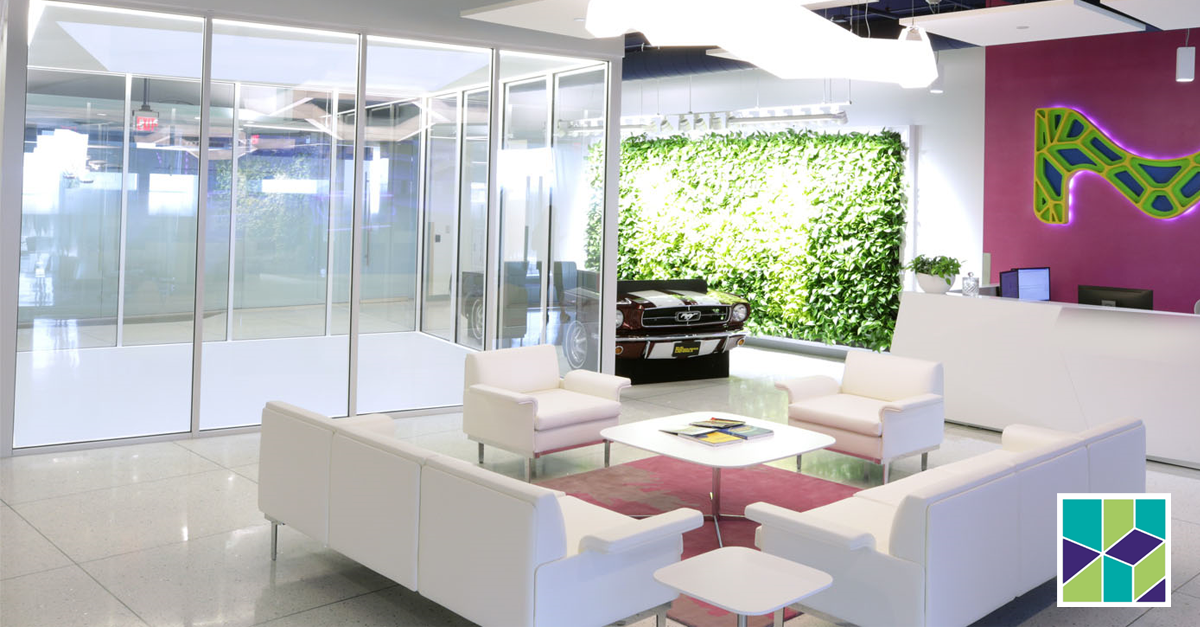

Let me paint you a picture. It is the end of quarter two and as a thank you for everyone’s hard work, I wanted to gift each person something that would bring them joy, energy, and a bit of the outside in, during a time of year when we all crave sunny blue skies. I decided I would plant one succulent for each member of the staff and place them front and center on their desks, like tiny green ambassadors of wellness. I was proud of myself. I was biophilic. I was bringing my beloved outdoors in and transforming the wellness and outlook of the office.
The succulents were dead in three weeks. Turns out, fluorescent light and recycled air conditioning do not a thriving ecosystem make.
But here’s the thing, that moment stuck with me. Because I truly believe my instincts were right; my execution was just lacking.
What if I missed the whole point of biophilia?
What if I changed HOW I looked at biophilia? Instead of viewing it solely as decoration or a one-off wellness gesture, what if it was about engineering a space that works WITH human biology?
Biophilia is the love of living things. It is hardwired in us from a young age. For me, it was nurtured since childhood. I spent every moment I could outside, playing, creating, planting, getting dirty, and, as I got older, chasing that oh-so-perfect tan, which I am starting to regret. To this day, there is no better pick-me-up than a brisk walk outside: the sun warming my face (through SPF 75 and the wide brim of my hat), the wind in my hair. We are not built for fluorescent lights and cubicle walls. Our nervous systems know it, even when our brains are too busy to notice.
A thought struck me as we debate RTO, Return to Office mandates. To some extent, they take away our ability to be outside. Think about that first warm day of spring, when you would grab your laptop and head outside to work, read, or take a call. Do our workplaces actually allow us to continue to enjoy nature?
As workplace design evolves, firms and facilities managers who are actually doing biophilia right are thinking about all five dimensions of the natural world, not just the visual one (remember that single succulent…).
Okay, so here’s where I think this all gets interesting. And I say this as someone who came up through interior design and architecture believing that biophilia meant putting a fig tree — fake or real — in the corner of a room (thank you, Shea McGee) and calling it a day. How do we incorporate all five senses into biophilic design?
- Sight: Yes, plants. But also natural light, biomorphic shapes, wood grain, and views to the outside. Anything that will signal to your brain that you are, in fact, not in a bunker.
- Sound: This one blew my mind. Playing nature sounds — birds, water, rustling leaves — in the background of an open office plan reduces distraction and improves focus. Which makes sense, right? I remember the white noise machines Irushed to buy when my babies were being kept awake by city traffic flying by all night on 5th Avenue. The sound calmed the nervous system and covered up the chaos (fingers tapping on a keyboard… aghhhhh). It lulled my sweet babies to sleep — and kept them asleep — in an otherwise chaotic environment. Could this same notion help us build a smarter acoustic strategy?
- Scent: Maybe rosemary for focus? Lavender for calm? Peppermint for energy? Whether through real plants or targeted aromatherapy, scent is a powerful lever. And yet most facilities planning conversations never touch it.
- Touch: Materials matter beyond how they look. Cork, bamboo, wool, and wood regulate temperature and humidity in a space. They are not just warm and pretty; they perform.
- Air: Living plant systems literally scrub VOCs (volatile organic compounds) and CO2 from the indoor air. Healthier air equals fewer sick days and better cognitive performance. There is data on this. I’ll let Caroline’s article handle the stats, but trust me, the numbers are GOOD.
Here is my take on all of this: people feel the shift of seasons in their bodies before they can articulate it. March hits and something wakes up. People start opening windows, eating lunch outside, noticing the light has changed. That same restlessness? It shows up in your workplace, energy dips, more sick days (or “well days,” calling in to enjoy a beautiful spring afternoon), more complaints about the office feeling stuffy and stale.
The office must earn people back. That was true the day RTO policies kicked in, and it is still true today. A space that smells like recycled air and looks like 2009 isn’t going to cut it. A strategic layer of nature added on top of what already exists in your space — better light management, living walls as acoustic panels, a scent strategy in common areas (read more about this here), natural material finishes — these are things that change how a space feels without blowing the capital budget.
Biophilia doesn’t need to mean a jungle in your lobby. It needs to be intentional. It needs to be sensory. It needs to be human.
How a space feels matters as much as how it functions.